Where can you see Austro-Hungarian heritage?
| Place | Country | What to see |
|---|---|---|
| Ljubljana | Slovenia | Baroque and Art Nouveau center, rebuilt after the earthquake of 1895 |
| Zagreb | Croatia | The Lower Town’s squares, theaters and 19th-century facades |
| Opatija | Croatia | The Habsburg seaside resort, with villas and a promenade |
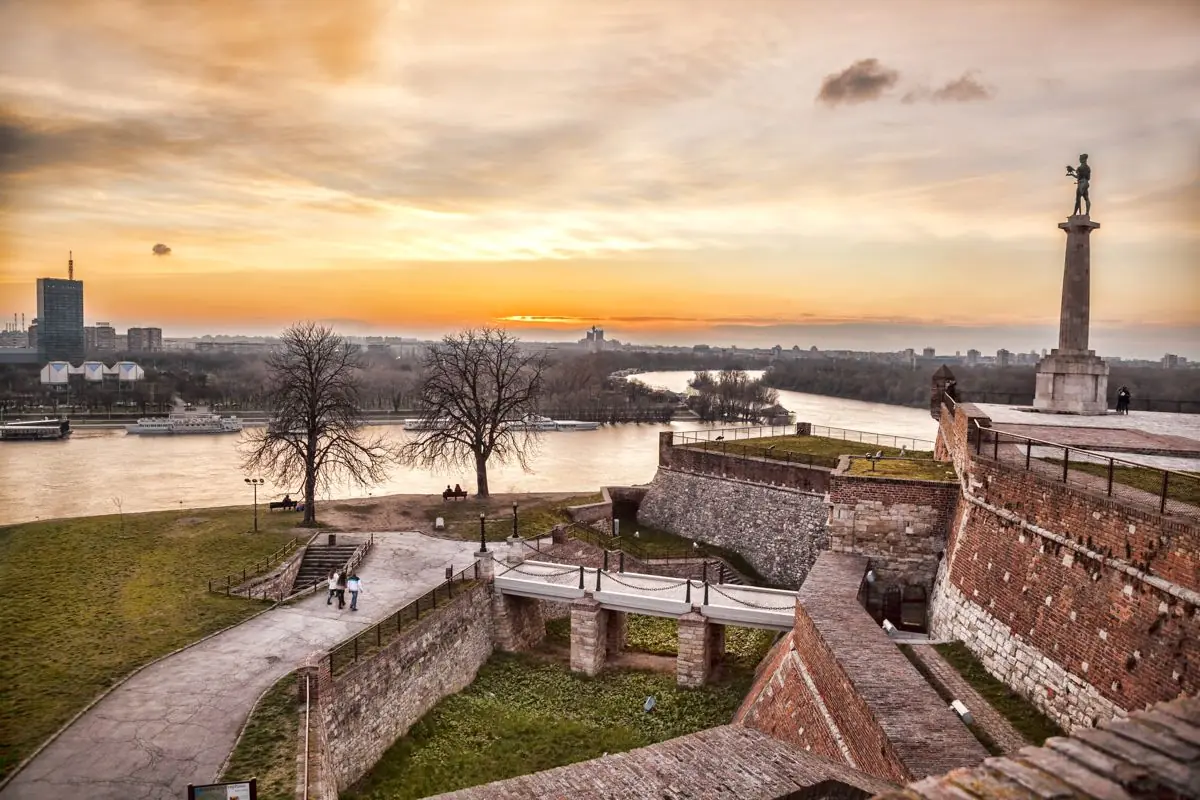
| Novi Sad and Petrovaradin | Serbia | A Central European town center and a huge 18th-century Habsburg fortress |
| Subotica | Serbia | An Art Nouveau town hall and synagogue |
| Sremski Karlovci | Serbia | A baroque town where a 1699 peace treaty moved the border with the Ottomans |
| Sarajevo | Bosnia and Herzegovina | The City Hall (Vijećnica) and the Austro-Hungarian streets west of the bazaar |
| Timișoara and Sibiu | Romania | Baroque squares and Central European town centers |
What is the difference between Ottoman and Habsburg towns?
You can see it in a single walk through Sarajevo. In the Ottoman bazaar, the streets are narrow, the buildings low and made of wood and stone, with craft shops and mosques. A few minutes west, the Austro-Hungarian city begins: wide streets, three- and four-story buildings, theaters and banks. The line between them is marked in the pavement, where the two worlds meet.
Why is Subotica worth a visit?
For its Art Nouveau architecture, among the finest in Central Europe. The Town Hall, finished in 1912, and the synagogue are covered in colorful Hungarian Secession tiles and ornaments. Nearby Palić, a lakeside resort, has more of the same. On three of our journeys, Wines of Pannonian Plain is a tasting at a winery built in this style.
How did Habsburg rule shape daily life?
Through coffee houses, pastries and order. Strudel, Kremschnitte (cream cake) and schnitzel came from Vienna; so did the habit of an afternoon coffee with cake, a grid of wide streets and many of the region’s theaters and opera houses. In Vojvodina, Slovenia and northern Croatia, life still feels more Central European than Balkan.
FAQ
Was Serbia part of Austria-Hungary?
Only the north, Vojvodina. The rest of Serbia was under the Ottomans, then independent.
Where was Archduke Franz Ferdinand assassinated?
In Sarajevo, near the Latin Bridge, on June 28, 1914.
Is Ljubljana’s architecture Austro-Hungarian?
Partly. Its center was rebuilt after 1895 in Art Nouveau style; architect Jože Plečnik added his own layer between the world wars.
Which tours include Habsburg towns?
Journeys through Slovenia, northern Croatia and Vojvodina, and our Imperial Cities programs with Vienna and Budapest.
Next step
See our journeys through Slovenia and northern Serbia, or read Architecture.