
Who lived in the Balkans before the Romans?
Illyrians in the west, Thracians in the east and Dacians north of the Danube, with Greek colonies along the coasts. Their traces survive in hill forts, Thracian tombs in Bulgaria and museum collections, and Lepenski Vir on the Danube shows that people lived here more than 8,000 years ago.
What did the Romans leave in the Balkans?
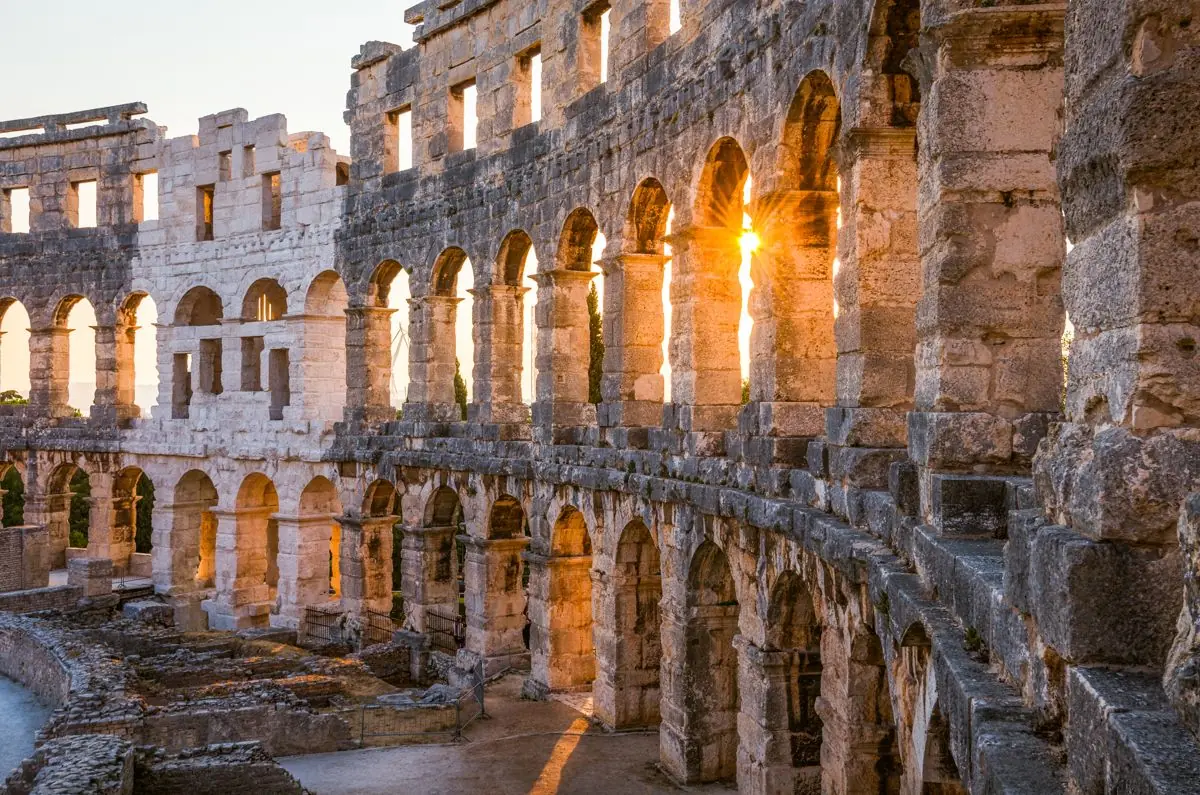
Cities, roads and emperors. The region was a heartland of the late Roman Empire: Diocletian, born in Dalmatia, built his retirement palace in Split around AD 305; Constantine the Great was born in Naissus, today’s Niš; Sirmium, in today’s Serbia, was one of the empire’s capitals. See Roman Heritage.
How did the Slavs and Byzantium shape the region?
Slavic tribes settled the peninsula in the 6th and 7th centuries and adopted Christianity from Rome in the west and from Constantinople in the east, a divide still visible between Catholic Croatia and Slovenia and Orthodox Serbia, Montenegro, North Macedonia, Bulgaria and Romania. From the 9th century, medieval kingdoms grew: Croatia, Bulgaria, Serbia under the Nemanjić dynasty, and Bosnia. Their monasteries, painted with frescoes, are among the region’s great treasures.
How long did the Ottomans rule the Balkans?
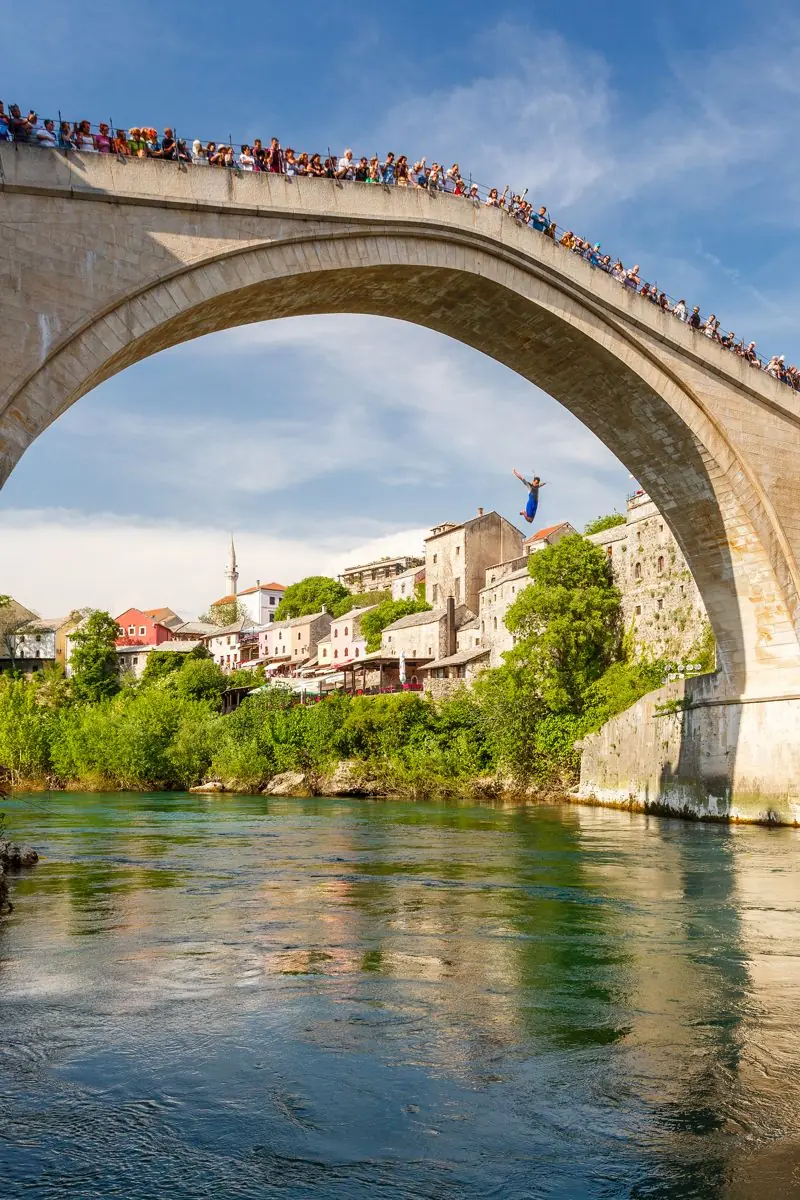
From the late 14th century until the 19th or early 20th century, depending on the region: roughly four to five centuries. Serbia fell in 1459, Bosnia in 1463, and Ottoman rule in parts of the south lasted until 1912. The Ottomans brought Islam, which many Bosnians and Albanians adopted, as well as bazaars, bridges, coffee and much of the region’s cooking. See Ottoman Heritage.
What about the Habsburgs and Venice?
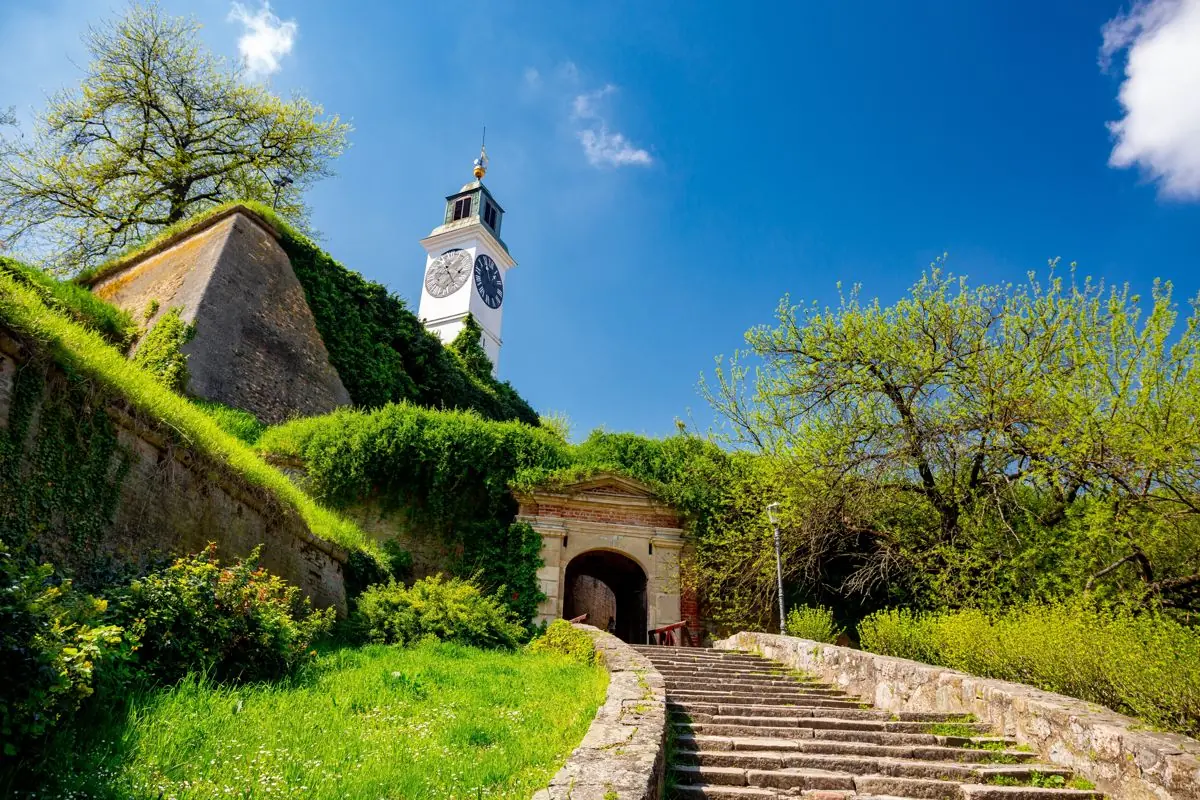
The north and the coast had different rulers. The Habsburgs, later Austria-Hungary, governed Slovenia, much of Croatia, Vojvodina in northern Serbia and Transylvania, leaving baroque and Art Nouveau towns. Venice held much of the Adriatic coast for centuries, while Dubrovnik, as the Republic of Ragusa, stayed independent until 1808. See Austro-Hungarian Heritage.
How did the Balkan nations become independent?
Through uprisings and wars in the 19th and early 20th centuries. Serbia’s uprisings began in 1804; Greece won independence in 1830; Serbia, Montenegro and Romania were recognized as independent in 1878, and Bulgaria in 1908. The Balkan Wars of 1912–1913 pushed the Ottomans almost out of Europe. In 1914, the assassination of Archduke Franz Ferdinand in Sarajevo started World War I.
What was Yugoslavia?
A state of the South Slavs, formed in 1918 as a kingdom and rebuilt after World War II as a socialist federation under Josip Broz Tito. It held together six republics until 1991, when it broke apart, followed by wars in Croatia and Bosnia and Herzegovina until 1995. See Yugoslavia.
What is the Balkans like today?
Peaceful, and closer to the rest of Europe than at any time in the last century. Slovenia, Croatia, Romania and Bulgaria are in the EU and the Schengen Area; Serbia, Montenegro, North Macedonia, Albania and Bosnia and Herzegovina are candidates for EU membership. Travelers find a region proud of its many pasts and very welcoming to visitors.
FAQ
Why are the Balkans called Europe’s powder keg?
A phrase from the years before World War I, when rival empires and new nations competed for the region.
Which religions are practiced in the Balkans?
Mainly Orthodox Christianity, Catholicism and Islam, often side by side, as in Sarajevo.
What language did people speak under the Ottomans?
Their own languages; Turkish was the language of administration, and many Turkish words remain in local speech.
Is history a big part of your tours?
Yes. Local guides explain it at the places where it happened.
Next step
Explore Roman, Ottoman and Austro-Hungarian Heritage, or see our journeys led by local guides.