
What are the main architectural styles in the Balkans?
| Style | Period | Where to see it |
|---|---|---|
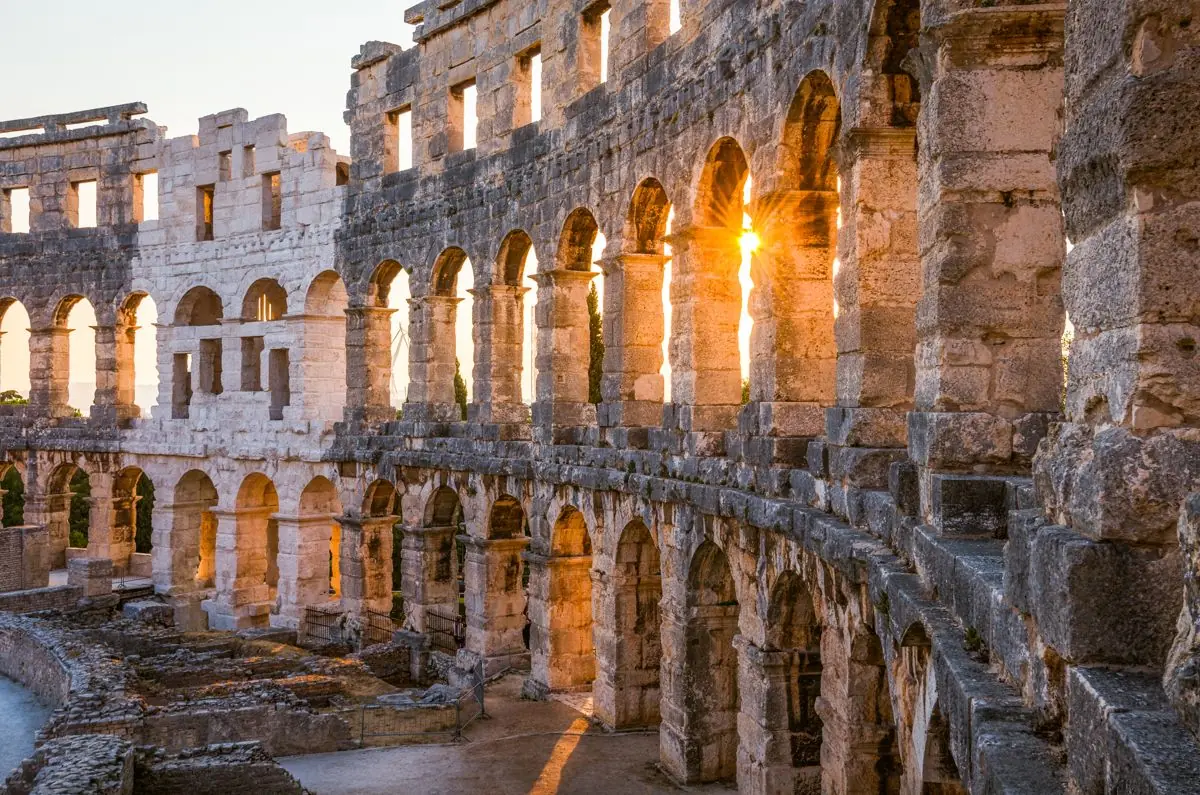
| Roman | 1st–4th centuries | Split, Pula, Plovdiv, Felix Romuliana |
| Byzantine and Serbian medieval | 9th–15th centuries | Studenica, Sopoćani, Ohrid, Manasija |
| Venetian Gothic and Renaissance | 13th–18th centuries | Dubrovnik, Kotor, Trogir, Šibenik, Piran |
| Ottoman | 15th–19th centuries | Sarajevo, Mostar, Višegrad, Skopje, Berat |
| Habsburg baroque and Art Nouveau | 18th century to 1918 | Ljubljana, Zagreb, Novi Sad, Subotica |
| Interwar and Plečnik | 1920s–1950s | Ljubljana, Belgrade |
| Yugoslav modernism | 1950s–1980s | New Belgrade, Skopje, the spomeniks |
| Vernacular | Centuries old | Log houses at Sirogojno, stone towers in Albania, Saxon villages in Transylvania |
What makes the Adriatic towns look Venetian?
Centuries of Venetian rule or influence. Along the coast from Piran to Kotor you see the winged lion of St. Mark on gates, Gothic windows, Renaissance loggias and bell towers like Venice’s. Šibenik’s Cathedral of St. James, built entirely of stone, is on the UNESCO list. Dubrovnik is the exception: as the independent Republic of Ragusa, it built in its own style, largely rebuilt in baroque after the earthquake of 1667.
What does an Ottoman town look like?
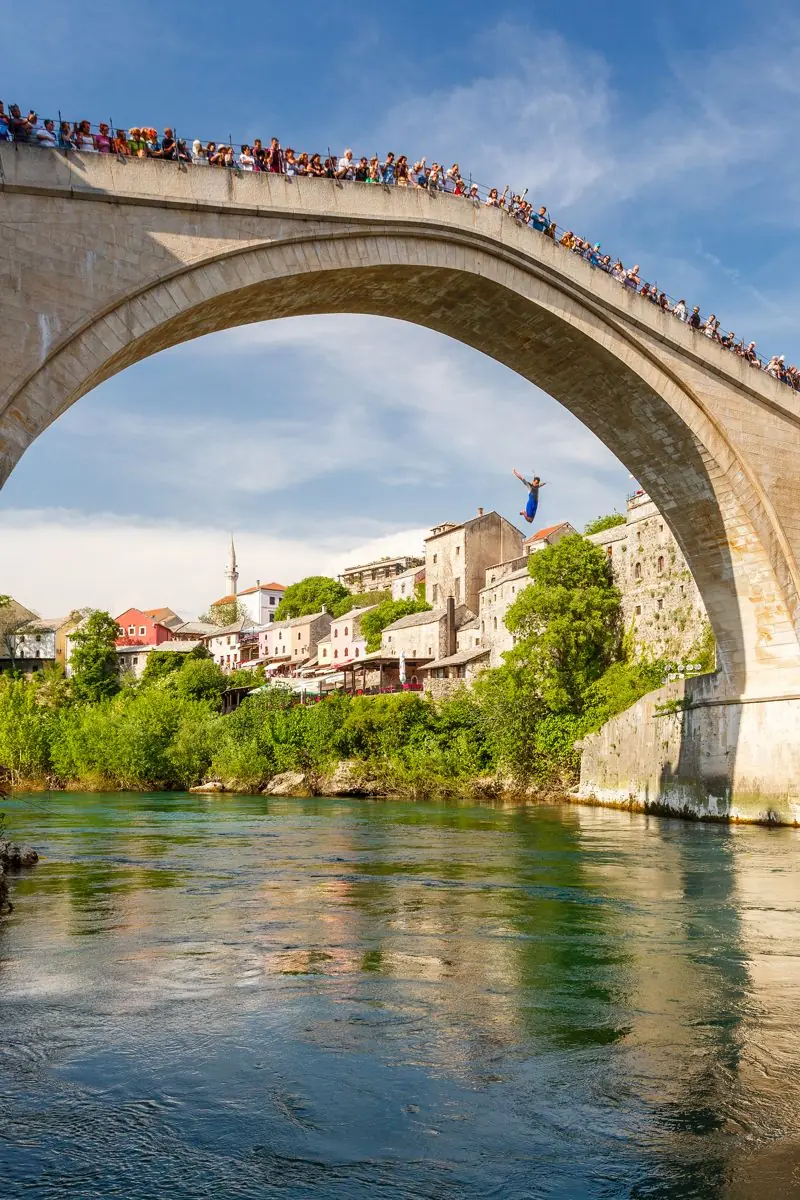
A čaršija, the market street, with low shops in stone and wood, a mosque with its courtyard, a fountain, a hammam and houses with closed courtyards and overhanging upper floors. Bridges are often the masterpieces: single stone arches like Mostar’s Old Bridge, or many arches like the bridge at Višegrad. Sarajevo, Mostar, Počitelj, Berat and Gjirokastër preserve this best.
What is Yugoslav modernism?
The bold concrete architecture of socialist Yugoslavia, from the 1950s to the 1980s: housing blocks, towers, hotels and abstract war memorials. New Belgrade, the Genex Tower and Skopje, rebuilt after the 1963 earthquake, are the best places to see it. Long ignored, it is now admired by architects, and the Museum of Modern Art in New York devoted an exhibition to it in 2018.
Who was Jože Plečnik?
A Slovenian architect who shaped Ljubljana between the world wars: the Triple Bridge, the Central Market colonnade, the National and University Library and the riverside promenades. His work in Ljubljana was added to the UNESCO list in 2021.
FAQ
Which Balkan town has the best architecture?
For variety, Sarajevo: Ottoman, Austro-Hungarian and Yugoslav buildings within a 20-minute walk.
What are spomeniks?
Abstract World War II memorials from Yugoslav times. See Yugoslavia.
Are there traditional village houses to visit?
Yes: the open-air museum at Sirogojno in Serbia, the stone houses of Gjirokastër, and Saxon villages in Transylvania.
Do your guides explain the architecture?
Yes; reading a town’s layers is part of every city walk.
Next step
See our journeys through Croatia, Bosnia and Serbia, or read Ottoman and Austro-Hungarian Heritage.